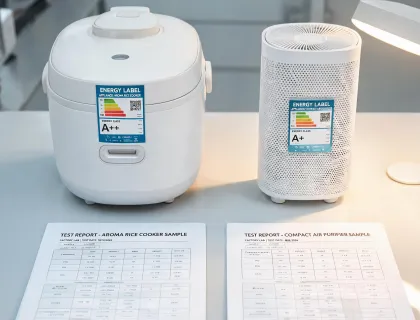
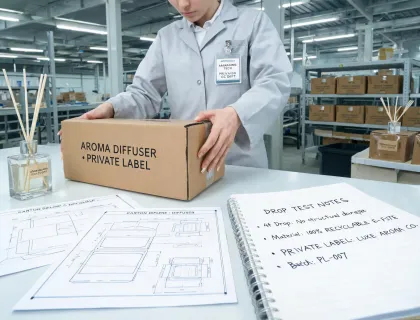
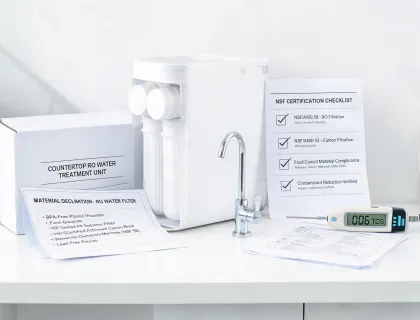
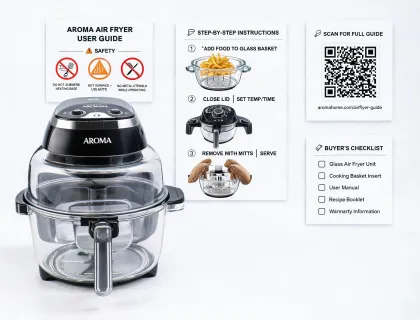
Sustainability in home appliances is rarely one dramatic claim. It is a series of ordinary choices: standby behavior, heating efficiency, carton sizing, manual clarity, recyclable materials, restricted substance declarations, and realistic repair or accessory planning. Aroma treats these choices as part of the product brief because private-label brands need claims they can explain to retailers, consumers, and compliance teams. A rice cooker with clearer water-ratio instructions can reduce dissatisfaction. A diffuser with better packaging can prevent shipping damage. A compact air purifier with documented filter information can make replenishment cleaner. These details are not glamorous, but they influence trust.
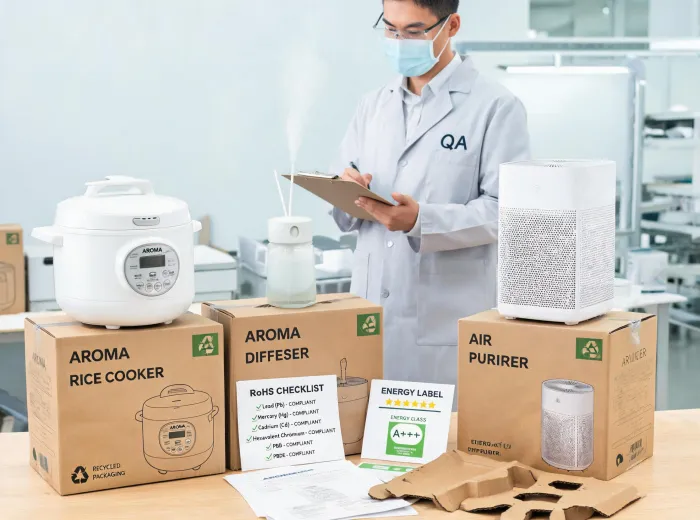
Better appliance sourcing is often quieter: fewer repacks, clearer manuals, lower standby waste, and cartons that survive the route.
Aroma's impact work starts before a model is chosen. We ask whether a product will be sold online or on a shelf, whether the claim language needs energy documentation, whether packaging can be right-sized, and whether accessories or inserts will prevent customer confusion. For small kitchen appliances, we look at coating, heating performance, removable parts, and instruction clarity. For air quality and climate products, we discuss filter information, operating noise, airflow, humidity, refrigerant or electrical considerations, and labeling expectations. For water treatment and cooking appliances, material declarations and user guidance are especially important.
The result is a product plan that buyers can defend. Aroma does not promise every program will be the lowest-impact product on the market. We promise to make the practical trade-offs visible early enough for the buyer to choose well.
Tell us the appliance category, sales market, packaging channel, and any energy, material, or documentation expectations. We will fold those requirements into the sourcing plan early.